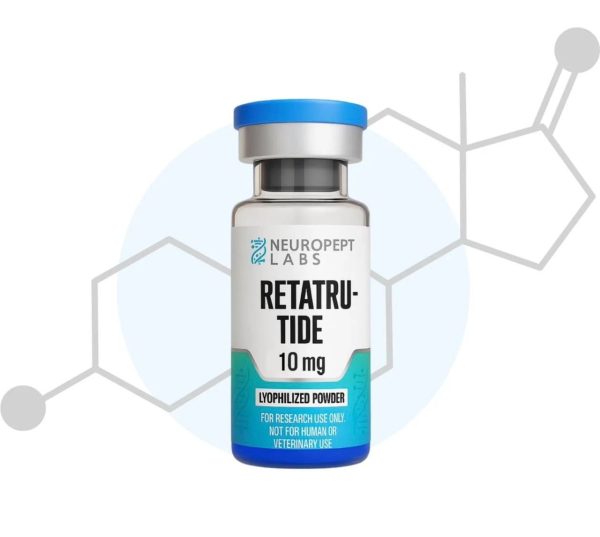
Retatrutide 10mg (GLP-3 RT) – Triple Agonist Research Peptide
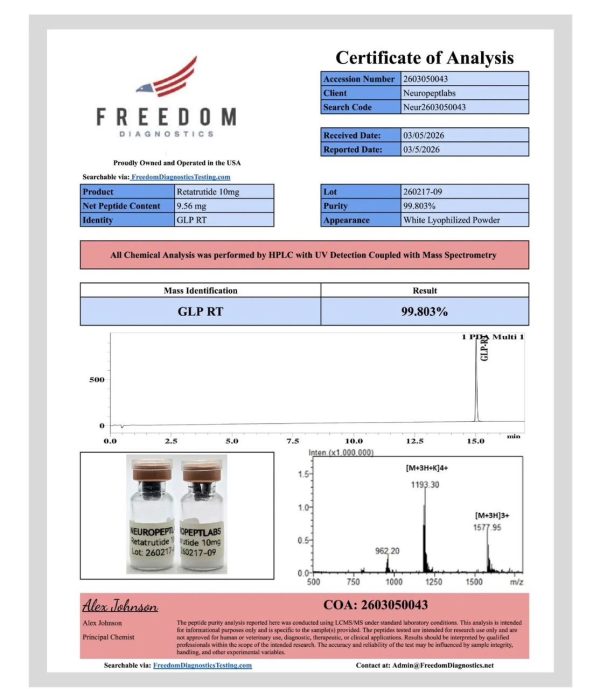
Retatrutide 10mg is an advanced research peptide designed for modern metabolic and endocrine studies. Also known as GLP-3 RT (LY3437943 analog), this compound belongs to a new class of triple receptor agonists that simultaneously target GLP-1, GIP, and glucagon receptors. Retatrutide 10mg provides researchers with a powerful tool to investigate complex metabolic pathways and receptor interactions in a single experimental model.
What is Retatrutide 10mg?
Retatrutide 10mg is a synthetic peptide engineered to activate three key metabolic receptors at once. Unlike traditional peptides that focus on a single pathway, this triple agonist model allows researchers to study multiple biological processes simultaneously. Its unique mechanism makes it highly relevant in metabolic, endocrine, and cardiometabolic research environments.
How it Works
The effectiveness of Retatrutide 10mg comes from its ability to engage three important receptors:
- GLP-1 receptor: Supports insulin signaling and appetite-related pathways
- GIP receptor: Enhances insulin response and regulates lipid metabolism
- Glucagon receptor: Promotes thermogenesis and fat oxidation
This triple-action mechanism allows researchers to explore how these pathways interact, providing deeper insight into metabolic regulation and energy balance.
Key Benefits
Retatrutide 10mg offers several advantages for laboratory research:
- Enables multi-pathway metabolic analysis
- Supports receptor interaction and cross-talk studies
- Ideal for dose-response experiments
- Provides consistent performance in controlled environments
Its ability to activate multiple receptors at once makes it a valuable compound for advanced research applications.
Why Choose Retatrutide 10mg?
The 10mg format is ideal for researchers conducting pilot studies or early-stage experiments. It provides enough material for controlled testing while minimizing waste and cost. Retatrutide 10mg allows laboratories to evaluate compound behavior, test hypotheses, and refine experimental designs before scaling up to larger quantities.
This format is especially useful for single-lab projects, small-scale assays, and initial dose-response studies where precision and efficiency are important.





Reviews
There are no reviews yet.